
Resilience, Focus, and Grit: What a Child Really Practices at a Chess Board
Updated: Aug 16
Ask a parent why they signed their child up for chess and you will usually hear something about thinking skills. Ask them a few months later what actually changed, and the answer is often about something bigger than chess.
It is about how their child handles losing. How long they can sit with something hard. Whether they come back the next week after a bad one.
Those three things, resilience, focus, and grit, are the real curriculum. Here is what building them looks like from inside a club room.
Resilience
Chess is one of the most honest games a child can play.
There is no referee to blame. No bad bounce. No teammate who missed the pass. There is nowhere to hide from your own decisions. When a child misses something on a chessboard, he usually knows it, and so does the person sitting across from him.
That can be brutal, and it is exactly the point.

The first time a child loses a piece to a fork she did not see, her face falls. Some kids go quiet. Some want to quit. Some announce loudly that they were not really trying. Every one of those responses is normal, and every one of them is the beginning of the lesson.
Because the next game starts in two minutes.
This is the thing that makes chess unusual. Setbacks come in a steady, survivable stream, several times an hour at chess club, in a room where nothing serious is at stake. A child gets to practice recovering from disappointment dozens of times in a single afternoon.
By weeks four through six though, something has shifted. She loses a piece, sits with it for a second, and then starts looking for a way back into the game. Nobody taught her that directly. She built it by doing it forty times.
That is what resilience actually is. Not the absence of frustration. The ability to keep thinking while frustrated.
Focus
Watch a chess club in the first week and you will see kids fidgeting, talking, moving pieces almost at random. They touch a piece the instant an idea occurs to them (usually those a and h pawns to get those rooks out!).
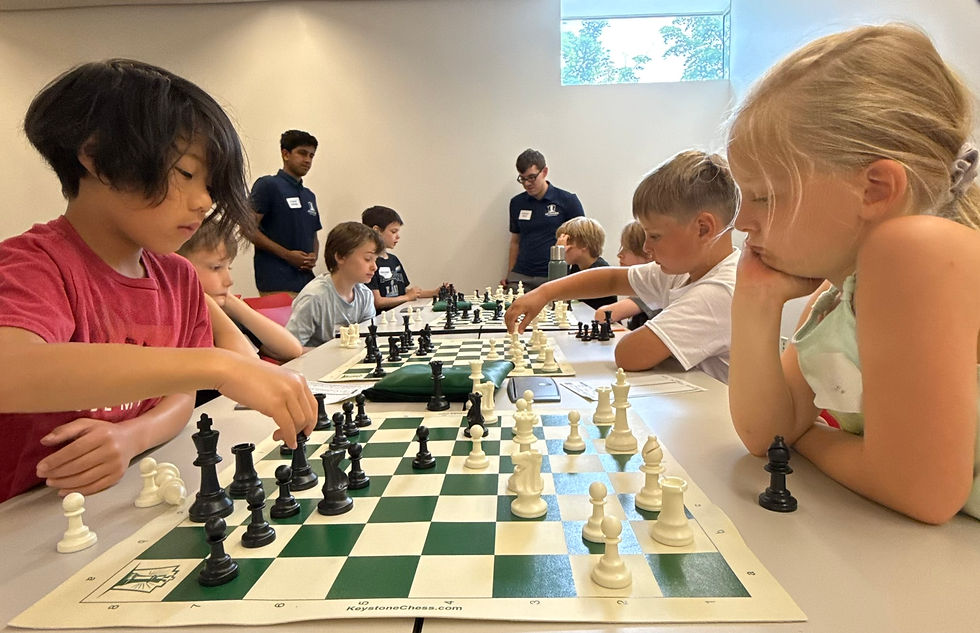
Watch the same room in the later weeks and the volume has dropped. Kids are leaning over boards. There are long silences (yes, coaches appreciate that). A child sits with his hand hovering over a knight, pulls it back, and looks at something on the other side of the board.
That pause is the entire skill.

Every good move in chess requires a child to do one of the hardest things a child can do: not act on the first impulse. Look at what your opponent is threatening before you do what you want to do. Consider a second option. Check whether the thing you are excited about is actually safe. Wait.
We are asking children to practice restraint, at a table, with no screen, for forty-five minutes, once a week. In 2026, that is close to countercultural.
And it compounds. The pause that a child learns in front of a chessboard is the same pause that can show up before he blurts out an answer in class, fires back at his brother, or rushes a math problem he already knows how to do.
Grit
Every child hits a wall in chess. For some it comes in week five, when the tactics get harder than the rules were. For others it comes when a friend starts winning consistently and they do not.
Chess makes that moment unusually difficult to avoid. The board gives immediate feedback. Improvement is measurable. And being stuck is hard to disguise.
This is the moment that matters.
What we do at that moment is simple. We do not lower the bar and we do not let a kid drift. We keep the child in the room, keep the questions coming, and wait.
Our coaches teach by asking rather than telling, because a child who works out the answer herself owns it in a way she never will if we simply hand it to her.
And then one week, it breaks.
She sees the pin before the coach finishes the question. She wins a game she would have lost in week two.
The chess matters less than what she now knows about herself: that being stuck is temporary, and that the way out is to keep showing up.
That belief is difficult to teach and almost impossible to fake. A child either has evidence for it or she does not.
What Parents Notice
Parents tell us their child got better at chess. That part we expect.
What stays with me is everything else. That she sat through homework without getting up. That he lost a soccer game and did not melt down. That she stopped and thought before answering.
Chess is the vehicle. Character is the cargo.
Most children do not get many opportunities to take a clean, honest look at what it takes to get good at something hard. Chess gives them one.
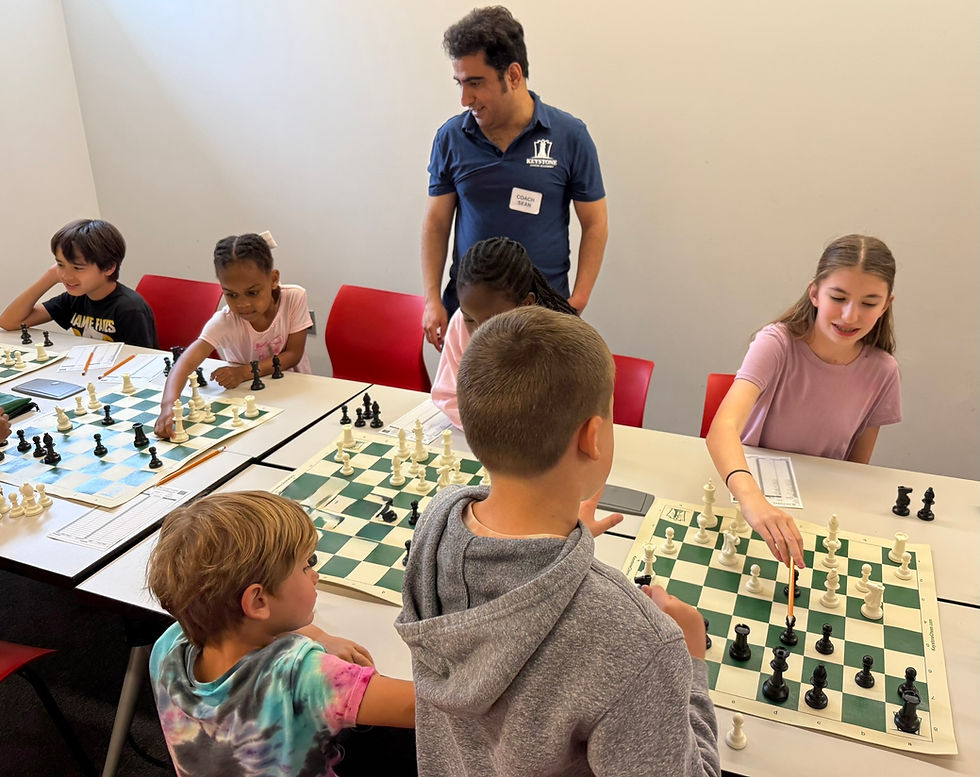
Keystone Chess Academy runs after-school chess clubs at elementary and middle schools across Chester, Delaware, and Montgomery counties. Find your school.

Comments