
What Makes a Great After-School Chess Program
Updated: Jul 21
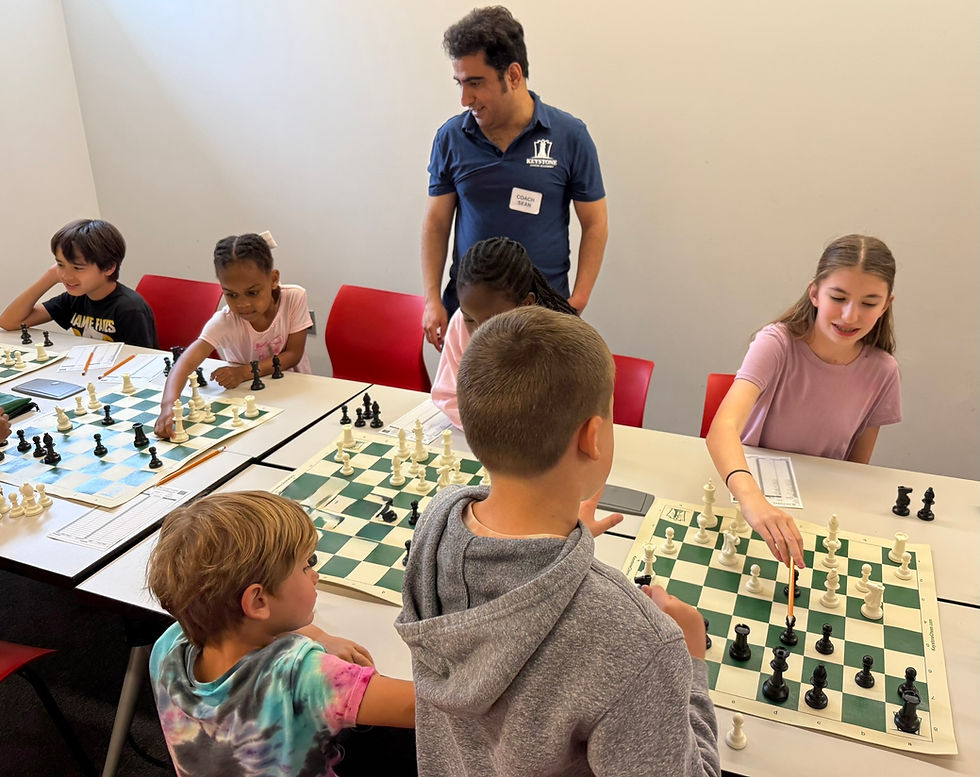
An after-school chess program looks simple from the outside. A quiet room, a few boards, a patient adult, and an hour of screen-free thinking. Much of that picture is accurate. But not every program is built the same way, and the parts that separate a great one from an average one are rarely visible on the flyer.
There are three things a great program gets right, and it gets them right in this order: children are safe, children grow as people, and children actually learn chess. Safety, character, chess. Leading with safety is an unusual way to talk about a game. That is the point. It is the thing a great program never treats as an afterthought.
What does a safe chess program look like?
A program is responsible for your child for an hour, often inside a building where you are not present. A great one is built around that responsibility rather than around the chess. It starts with the adults in the room. In Pennsylvania schools, employees and contractors who have direct contact with students are generally required to maintain current state criminal-history, child-abuse, and FBI background clearances. A great program verifies the appropriate clearances for every adult working directly with children and treats that as the floor rather than the finish line.
Vetting is only half of it. A great program also tells you who these coaches are. In many programs a coach is simply assigned and appears, and parents never learn their name, their playing background, or anything about the person spending an hour a week with their child. A great program introduces its coaches by name, shares their chess credentials and their experience working with children, and treats that openness as basic respect. You should not have to wonder who is standing at the front of the room.
Safety also shows up most clearly at pickup. Dismissal is one of the most sensitive moments in any children’s program, and it is where a careful operation and a careless one can look very different. A great program knows exactly who each child is released to, verifies it every single time, and has a calm plan for the days a parent runs late. No child is ever left waiting alone, and no child leaves with someone who was not authorized.
The rest follows from the same instinct. Instruction happens in groups, never one adult alone with one child. And when something happens—a bumped knee, a hard day, a squabble over a board—the program tells you rather than hoping you never ask. A program that has thought all of this through before you walk in is one that runs on care. A program that improvises it is one that runs on luck.

What should a child gain beyond the game?
Chess is the reason a child shows up. But it is rarely the most valuable thing they carry home. A great program treats the board as a place to practice the things that are genuinely hard for children. Sitting with a difficult problem instead of rushing. Losing without falling apart. Waiting a turn. Thinking before acting. These are not chess skills. They are life skills that chess happens to teach unusually well, one quiet game at a time.
The clearest tell is what a coach does when a child loses and gets upset, because that moment arrives in every session. A great coach treats the loss as the actual lesson, not a failure to smooth over. They praise the effort and the thinking, not only the win, and they name good sportsmanship out loud instead of hoping it appears on its own.
This is also where rewards quietly get in the way. Points and prizes are fun, and children respond to them in the short term. But when the reward becomes the reason a child plays, the deeper habits never form. A child who chases a prize learns to chase prizes. A child who is taught to think learns to think. The fun should come from the game itself, from a hard position worked out and a plan that actually holds. A great program keeps a child's attention there rather than on the trophy.
How do you know children are actually learning?
A child in a great program gets better. That sounds obvious, but plenty of programs are really just supervised open play with the occasional tip, and a term can pass without much changing.
Real learning rests on two things working together. First, the coaches are strong players with genuine experience teaching children, because being good at chess and being good at teaching chess are not the same skill. Second, there is an actual curriculum that moves forward from week to week, so a child in week eight has progressed from where they began in week one.
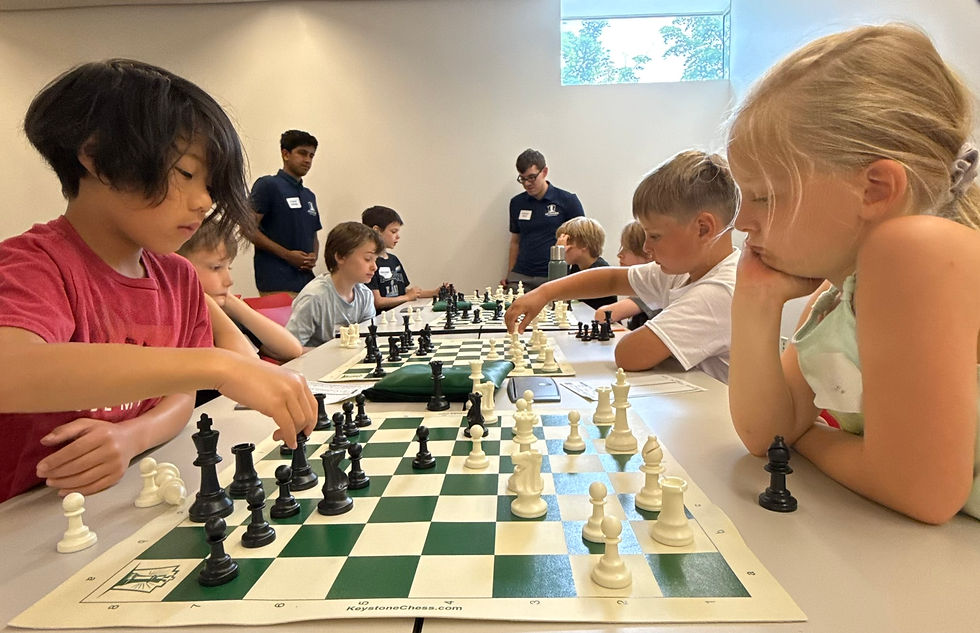
A great program also handles the room as it really is: a child who has never moved a pawn may be sitting beside one who has played for years. Both should be appropriately challenged, rather than one becoming bored and the other feeling lost. The best coaches manage this by teaching through questions. Instead of announcing the right move, they ask the one that helps a child find it. That is slower and harder, and it is how understanding actually takes hold.

What should I ask before enrolling my child?
Most of what separates a great program from an average one comes out in a short conversation. These are the questions worth asking, and what a good answer sounds like.
Is every adult in the room cleared, or only the lead coach? Every adult. A program that clears the lead and waves through the helper has not thought about this seriously.
Who is my child's coach, and what is their background? You should get a name, their chess credentials, and how long they have worked with children. If the answer is vague, the program does not know either.
What is the dismissal procedure? A specific answer, not a general one. Who is authorized, how it is verified each week, and what happens on the day you are running late.
Is there a written curriculum? Ask what a child learns in week one and what they are expected to understand by week eight. If the answers are essentially the same, the program may not be providing meaningful progression.
What is the enrollment cap, and is there a second adult in a full room? Both numbers should exist before you ask for them.
What happens when a child loses and gets upset? This one tells you the most. Listen for whether the coach treats it as the lesson or as a problem to move past.
How will I hear about a problem? A bumped knee, a hard day, a squabble over a board. You should hear it from the program, not from your child three days later.
Why does the order matter?
Almost any program can put boards on tables. What separates a great one is the sequence. Safety first, because nothing else matters if a child is not cared for. Character next, because that is the lasting gift. Chess throughout, because the delight of the game is what makes the deeper lessons stick.
That is the standard worth holding any program to, including ours.
If your child's school does not already have a program like this, you can help bring one in. It usually takes one parent to start the conversation. Request a club at your school and we will take it from there.

Comments